
What Makes a Wedding Film Truly Cinematic — A 2026 Filmmaker's Guide
Frame rates, lens choice, music licensing, audio rigs and editing decisions — everything that turns a wedding video into a wedding film.
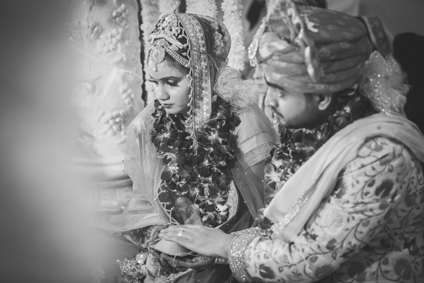
A 'cinematic' wedding film isn't a filter. It's a stack of decisions — gear, framerate, audio, music, edit rhythm — that together produce something that feels like a movie instead of a recording.
Here's what that stack actually looks like, broken into the four phases: gear, capture, audio, and edit.
Phase 1: The gear that produces cinematic footage
Cameras don't make films cinematic. People do. But certain cameras make the cinematic look much easier to capture in the chaos of a wedding day.
Our wedding film kit
- Sony FX3 (primary) — full-frame, dual native ISO, S-Log3 colour profile
- Sony A7S III (secondary) — backup body, identical colour science
- Sigma 35mm f/1.4 + 85mm f/1.4 primes — the entire film is shot on these two lenses 80% of the time
- DJI Ronin RS3 Pro gimbal — for tracking shots without the steadicam workout
- DJI Inspire 3 — drone, 8K Pro Res RAW, DGCA registered
- Atomos Ninja V external recorder — for ProRes capture when needed
Why prime lenses matter
Zoom lenses are convenient. Prime lenses force composition. The shallow depth of an 85mm at f/1.4 produces the background separation that makes wedding footage look like a film — the foreground subject is sharp, everything behind melts into bokeh.
If your videographer is using kit zooms (18-200mm style), the footage will look like a vacation video. Ask before you book.
Phase 2: Capture decisions on the wedding day
Frame rate
We shoot weddings at 24fps for narrative footage (vows, walks, conversations) and 60fps or 120fps for slow motion (mandap fire, lehenga twirl, jaimala toss).
24fps is the cinematic standard because that's the cadence the human brain associates with film. 60fps looks like reality TV. The frame rate alone shifts the perception of the footage.
Colour profile
S-Log3 (Sony) or V-Log (Panasonic) preserves the maximum dynamic range. The footage looks flat and grey in-camera, but in the edit, we can recover detail in highlights (bridal bouquet whites, lehenga gold) and shadows (mandap fire, candle-lit reception) that a baked-in colour profile would have crushed.
This is the single biggest factor in why our wedding films look like films — and why footage from wedding videographers using Auto colour looks flat.
The shot list cinematographers actually use
A cinematic wedding film needs five categories of footage, and missing one will hurt the final edit:
- Establishers — venue, sky, signage, decor
- Detail shots — rings, shoes, mehendi, jewellery, food
- Emotion shots — close-ups during vows, parents during vidaai, bride before reveal
- Action shots — first walk, jaimala, fire pheras, sangeet performances
- Couple-only moments — golden hour portrait sequence, no audience
Most wedding videographers nail 1–4 and skip 5. The couple-only sequence is what makes the film yours instead of generic.
Phase 3: Audio is half the film
This is the most under-appreciated decision in wedding filmmaking. Audio carries 50% of the emotional load of any film.
What we record
- Vow audio — lavalier mic on the groom (RØDE Wireless Pro), backup recorder on the priest's mic
- Reception speeches — direct line from the venue PA system + lav backup on the speaker
- Ambient room tone — every room, 30 seconds clean, for editing layer
- Natural sound — applause, laughter, music, even the silence before the first kiss
Most couples cry the loudest at the audio in their wedding film, not the visuals. Real vows, real laughter, real "I do" — that's the texture that makes a film stick.
Why a separate audio recorder matters
Many videographers rely on the camera's onboard mic. The audio quality is usable for ambient only — it's useless for vows. A dedicated recorder (Zoom F3 or Sound Devices MixPre) pays for itself in the first wedding.
If your videographer can't show you their audio kit, ask what they're doing for vow recording. The answer should never be "the camera."
Phase 4: The edit — where films are actually made
Music first, edit second
We pick the music before we touch the footage. Then we edit to the music.
This sounds obvious but most wedding videos are edited the other way around — the editor cuts the footage chronologically and slaps a track on top. That's how you get videos that feel like a 12-minute slideshow.
The best wedding films feel like a song you wish you'd written. The cuts land on beats, the emotional crescendo lines up with the music's swell, and the final shot fades on the last note.
Music licensing matters
We use Musicbed, Artlist, and Soundstripe for all client wedding films. Never YouTube rips, never pirated tracks. Two reasons:
- Legality — one copyright strike and the film disappears. Couples lose the ability to share their wedding film on Instagram or Facebook permanently.
- Quality — licensed cinematic libraries have tracks composed for film. They have the structure, the swells, the silences. YouTube hits don't.
Cost: about $20/month for unlimited licensed music. Built into our film packages.
Cutting on feeling, not on chronology
The temptation is to start with the bridal entry, end with the vidaai. Don't.
The strongest wedding films open on the most emotionally charged shot — often the parents' reaction during the vows or the bride's first look — and use chronology only as a loose scaffold. Cut on emotion. Pace on music. Anchor on quotes.
What the deliverable looks like
A typical premium wedding film delivery from us:
- 24-hour teaser reel — 60 seconds, vertical and horizontal, ready for Instagram
- 3-4 minute highlight film — the social-shareable version
- 8-12 minute feature film — the full story, for the family WhatsApp group
- Raw footage backup — on hard drive, only on request
All films delivered in 4K, with separate vertical edits for Reels.
Common mistakes that ruin wedding films
- Mixing 24fps and 30fps in the same edit. The motion looks broken.
- Using auto white balance on multiple cameras. Skin tones drift between cuts.
- Editing without LUTs. S-Log3 footage looks bad without proper grading. The edit needs a colourist.
- Drone shots used as transitions only. Drone footage should establish, not just connect.
- Forgetting silence. A 30-second moment with no music — just real audio of the vows or the parents' tears — is often the most powerful cut in the entire film.
Should you book a separate film team?
If your photo and video team are the same crew, you're getting compromised both. The shooter can't be in two places at once. For weddings under ₹3L photography budget, it's fine to have one combined team — but for any bigger production, dedicated photo and dedicated video teams produce dramatically better deliverables.
Our film packages always come with a separate cinematography team — we never split focus.
What's next
If you're planning the drone footage, the rules and permissions matter more than the camera choice. And if you're still locking the venue, pick one with ceiling height — it makes every wide shot in the film look better.
Ready to talk about your wedding film? Reach out — we'll send back a custom film proposal with sample work in your budget bracket within 24 hours.
Frequently Asked Questions
What's the difference between a wedding video and a wedding film?+
How long should a wedding film be?+
Do you license the music in wedding films?+
How long does a cinematic wedding film take to deliver?+
Written by
Mukul
Continue Reading
Drone Shoot Rules in India 2026 — Wedding Couple's Legal Checklist
DGCA permissions, no-fly zones, UIN registration and how to make sure your wedding drone shots are legal, insured and breathtaking — without ending up on the wrong side of the law.
21 Best Wedding Photoshoot Poses That Never Get Old (2026 Guide)
From the dip kiss to the lehenga twirl — a frame-by-frame guide to wedding poses that look effortless, intimate and timeless. Used in 500+ weddings across Delhi NCR.