What is Candid Wedding Photography? The Honest Answer
Every studio in India claims to do 'candid wedding photography' — but the term has become so diluted it's almost meaningless. Here's what real candid actually is, and how to tell the difference.
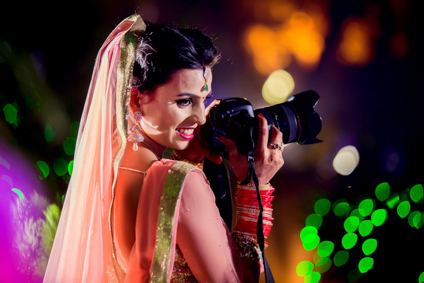
If you've searched for a wedding photographer in India in the last decade, every single result called themselves a "candid wedding photographer." It's the most overused, most misunderstood, and most dishonestly marketed term in the industry. Here's what it actually means — and how to tell the difference between real candid work and styled-to-look-candid work.
The original definition
"Candid photography" comes from photojournalism in the 1930s — Henri Cartier-Bresson's "decisive moment." The photographer observes, anticipates, and captures life as it happens, without direction or interference. The subject doesn't know — or doesn't care — that the camera is there.
Translated to weddings: the photographer stays invisible. The bride doesn't perform for the camera; the family doesn't pose. The photographer's job is to anticipate where the next real moment will happen, position themselves there, and shoot through it without disrupting it.
This is hard. It requires fast cameras, fast lenses, deep technical confidence, and — most importantly — patience. You stand in position for 20 minutes waiting for the right second.
What "candid" has become in India
Around 2010, "candid wedding photography" entered the Indian wedding vocabulary via marketing — initially from studios doing genuinely documentary work, then rapidly diluted as every traditional studio rebranded.
Today, "candid wedding photography" in India usually means one of three things:
- True candid (rare): documentary photography with zero direction. Maybe 10% of studios that claim candid actually do this.
- Styled candid (most common): the photographer poses people but tells them to "act natural" — laugh, look at each other, walk towards me. The frames look candid but aren't.
- Mixed (the honest middle): 60–70% genuine candid frames, plus essential posed groups (family portraits, formal couple shots). Most premium studios sit here.
The problem isn't styled candid existing — it's studios calling themselves "candid photographers" when 90% of their portfolio is staged.
How to tell the difference in a portfolio
Real candid frames have specific visual signatures:
1. People aren't looking at the camera. Most frames have eye contact between family members, not between subjects and the lens.
2. Imperfect composition is preserved. A genuine candid often has someone's hand in the corner, a slightly tilted horizon, or the subject not at a textbook composition point. The moment matters more than the rules.
3. In-between expressions exist. The mother halfway between laughing and crying. The groom mid-blink. The bride scratching her nose. Styled candid removes all of these.
4. Background interaction is messy. Real life has guests on phones, kids running across the frame, an uncle who walked into the shot. Edited-to-perfection backgrounds are a sign of staging.
5. The same moment isn't repeated. A candid moment happens once. If a "candid" portfolio shows the same exact pose from 3 different couples, it's styled.
Why candid is significantly harder than traditional
A posed wedding photograph is technically straightforward: arrange people, set exposure, count three, take five backups. Move on.
A candid photograph requires:
- Reading body language to anticipate the next moment 2 seconds before it happens
- Camera always ready at correct exposure, focus and ISO for changing light
- Position discipline — being where the moment will be, not where it just was
- Restraint — not interrupting an unfolding moment to suggest a better one
A candid photographer at a wedding takes 3,000–5,000 frames to deliver 400–600 keepers. A traditional photographer takes 1,200 frames to deliver 600. The difference is the percentage of throwaway frames during the hunt for the genuine moment.
What's the right candid-to-posed ratio for a wedding?
You'll need some posed shots — period. Family group portraits are required for albums. Formal couple shots are expected. Religious ceremony shots have specific framing requirements.
A reasonable ratio for a modern wedding:
- 65% candid — most of the wedding day captured as it unfolds
- 25% traditional posed — family groups, couple portraits, ceremony key frames
- 10% editorial — deliberately styled portrait setups during golden hour
If a "candid" photographer's portfolio is 70% styled, they're not doing candid work regardless of what they call it.
The questions to ask before booking a "candid" photographer
-
"Can I see a complete gallery from a recent wedding?" Not a highlight reel — a complete folder of 400+ images. Real candid work shows in volume.
-
"How much do you direct the couple during the wedding day?" Honest answer: "We direct family portraits and formal shots — the rest we observe." Warning signs: "We pose every shot" or "We don't direct at all" (everyone needs some direction).
-
"What lens do you use most during the ceremony?" Real candid photographers shoot ceremonies with 70-200mm telephotos — to capture from a distance without interrupting. Studios using 24-70mm zooms at the ceremony are usually closer to the action and directing.
-
"How many frames will you shoot through the wedding day?" A candid photographer shoots through 3000+ frames in a wedding day. A poser shoots 800–1500.
What we do at Mukul Photography
We're upfront that our work is roughly 65% candid, 25% posed (mostly family groups), and 10% editorial portraits. We use 70-200mm telephotos on a second body during ceremonies to stay invisible while the lead photographer shoots wide. We direct the formal moments, observe the rest.
If you want 100% documentary work, we'll tell you honestly that the wedding album won't have the family group portraits everyone expects, and recommend you reconsider. If you want 100% styled, we'll recommend a different studio.
See our candid wedding photography service or view a complete recent wedding gallery — we'll send one to anyone considering booking. That's the only honest way to evaluate candid work.
Frequently Asked Questions
What is candid wedding photography in simple terms?+
How is candid wedding photography different from traditional?+
Why is candid wedding photography more expensive?+
Are 'candid' photos sometimes posed?+
How do I know if a wedding photographer really does candid work?+
Written by
Mukul
Continue Reading
Delhi NCR Wedding Photographers — How to Pick the Right One
After shooting 500+ weddings in Delhi NCR, here's the honest framework we'd use if we were a couple hiring a photographer — not a studio trying to sell you.
How Much Does a Wedding Photographer Cost in Delhi NCR? (2026)
Honest, itemised wedding photography pricing for Delhi NCR — from budget candid shoots at ₹35,000 to full cinematic legacy packages at ₹3L+. No jargon, no upsells.
21 Best Wedding Photoshoot Poses That Never Get Old (2026 Guide)
From the dip kiss to the lehenga twirl — a frame-by-frame guide to wedding poses that look effortless, intimate and timeless. Used in 500+ weddings across Delhi NCR.