
South Indian Wedding Photography in Delhi NCR — Rituals & Frames
From Tamil Brahmin to Telugu, Kerala Hindu to Karnataka Konkani — what differs about photographing South Indian weddings in Delhi NCR, and the specific shots every family expects.
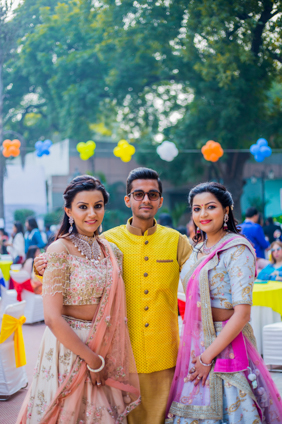
South Indian weddings in Delhi NCR represent a specific photographic challenge — they're ritually intensive, time-compressed, and require cultural fluency that many Delhi-based photographers (used to North Indian weddings) don't bring. We've shot Tamil Iyer, Tamil Iyengar, Telugu, Kerala Hindu, and Karnataka Konkani weddings in Delhi over the past decade. Here's what specifically differs.
The five major South Indian wedding traditions in Delhi NCR
| Tradition | Origin | Typical duration | Key ceremony |
|---|---|---|---|
| Tamil Brahmin (Iyer) | Tamil Nadu | 2 days | Kanyadanam, muhurtam tali tying |
| Tamil Iyengar | Tamil Nadu | 2 days | Similar to Iyer with Vaishnava additions |
| Telugu | Andhra/Telangana | 1–2 days | Kanyadanam, jeelakarra-bellam, mangalsutra |
| Kerala Hindu | Kerala | 1 day | Saptapadi, thali tying, often very brief |
| Karnataka Konkani | Karnataka coast | 1–2 days | Dharrey, mangalsutra, blessings |
Each has distinct rituals, but they share core photographic features: early morning timing, family-centric energy, and a defining "muhurtam" moment that must be captured perfectly.
The compressed South Indian wedding timeline
Unlike a 3–5 day Punjabi wedding spread out over evenings, a South Indian wedding compresses major rituals into a single day with a specific astrological deadline. Here's a typical Tamil Brahmin wedding day:
4:30 AM — Bride's getting-ready begins 5:30 AM — Photographer arrives, captures pre-dawn family moments 6:00 AM — Janavasam (groom's procession to the venue) and parents' welcome 6:30 AM — Nichayathartham (formal engagement, if combined with wedding) 7:00 AM — Kashi Yatra (groom mock-leaves for Varanasi, brought back by bride's father) 7:30 AM — Maalai matrimo (garland exchange) 8:00 AM — Kanyadanam (bride formally given by her father) 8:30 AM — Muhurtam — the tali is tied (THE moment) 9:00 AM — Saptapadi (seven steps around the fire) 9:30 AM — Blessings, family group portraits 10:30 AM — Reception lunch Afternoon — Couple departs
This entire sequence happens in 6 hours. There's no room for re-shooting. The photographer is on continuous coverage from 5:30 AM to noon.
The single most important frame — the muhurtam (tali tying)
In every South Indian wedding tradition, the defining ritual is when the groom ties the mangalsutra (called tali in Tamil, mangalsutra in Telugu, thaali in Malayalam) around the bride's neck. This moment is:
- Timed to an astrologically precise muhurtam (often calculated to the minute)
- Brief — 30 to 60 seconds of actual tying
- Witnessed by both families with specific positions
- Accompanied by nadaswaram music reaching peak intensity
- Followed by the bride's face being seen "married" for the first time
The photographer needs:
- One camera on the groom's hands tying the tali (close-up, 85mm or 100mm macro)
- One camera on the bride's face (the expression at this exact moment is the album cover)
- One camera wide, capturing both families witnessing
- Pre-focused, pre-exposed, pre-positioned 5 minutes before the muhurtam
There is no second chance. A photographer who hasn't shot a South Indian wedding before will often miss the moment because they're capturing the wider environment when they should be on the hands.
The 10 must-have South Indian wedding shots
- Pre-dawn bride preparation — pinning of jasmine in hair, draping of madisar (Tamil) or kanjeevaram saree
- Bride's morning portrait — full traditional bridal look before leaving for the mandap
- Groom's veshti tying — the ceremonial cloth being tied (often by an elder brother or uncle)
- Kashi Yatra mock-leaving — the groom symbolically leaving and being convinced to stay
- Maalai matrimo / garland exchange — both garlands, both faces, both families' reactions
- Kanyadanam — the bride's hand being given by her father (extremely emotional)
- The tali tying — multi-camera coverage of the muhurtam moment
- Saptapadi — the seven-step ritual around the fire
- Talambralu / arsina — turmeric-rice or turmeric-water blessing exchange
- Post-ceremony family blessings — elders blessing the new couple individually
Outfit and visual palette considerations
South Indian weddings have a distinctive visual identity:
- Bride's kanjeevaram saree in deep colours — red, maroon, mustard, peacock blue, often with gold zari
- Temple jewellery — gold-heavy, intricate, requires close-up coverage with macro or close-focus lens
- Mallipoo (jasmine garland) in the bride's hair — fragrant, white, photographs beautifully against dark hair
- Groom's veshti and angavastram — white or cream, often with gold border
- Pellikuturu (Telugu) / mappillai sallai (Tamil) — specific bridal jewellery sets photographed individually
The colour palette is warmer and more saturated than North Indian weddings. Photographers need to manage red and gold channel saturation carefully in post to avoid over-cooking the colour grade.
Decor differences
- Banana leaves and coconuts — central to the mandap
- Floral garlands — particularly nadaswaram-related decor, with jasmine and rose
- Brass utensils and lamps — kept at multiple ritual points; capture in their original positions before the ceremony begins
- No fire pit in some traditions — Kerala weddings often don't include a homa (fire ritual); brief your photographer about which specific ceremonies your family follows
- Vedic accessories — kalasham (sacred pot), mangalyam (turmeric-rice mixture), agnihotra accoutrements — each has photographic significance
Cultural nuances Delhi-based photographers often miss
- Don't direct elder family members — South Indian families expect the photographer to observe, not direct. North-Indian-style "smile please" with elders is considered intrusive.
- The bride doesn't smile during the muhurtam — She typically looks down or has a serious expression as the tali is tied. This is correct, not a missed opportunity. Don't ask her to "look happier."
- Saree draping matters — A Tamil madisar or a Kerala mundu has specific draping that elders will notice if it shifts. Don't have the bride move unnecessarily for poses that disturb the drape.
- The priest's space is sacred — Photographers should not cross between the priest and the fire/sacred objects. Brief your team explicitly.
- No flash during specific mantras — Particularly during the homa (fire ritual), some communities consider flash disruptive. Coordinate with the priest's assistant beforehand.
Venues commonly used for South Indian weddings in Delhi NCR
- Tamil Sangam Auditorium (Lodhi Road) — Most popular venue for Tamil community weddings
- Andhra Bhavan (Ashoka Road) — Telugu community weddings
- Sai Mandir, Lodhi Road — Religious venue for ceremony-only weddings
- Various hotel banquets — modified with traditional decor for the community
- Karol Bagh and Mayur Vihar community halls — for budget-conscious community weddings
The venue's familiarity with South Indian wedding requirements matters — kitchen capabilities (for traditional South Indian feast), priest accommodation, ceremony timing flexibility.
Our South Indian wedding coverage
We've shot 40+ South Indian weddings in Delhi NCR — Tamil Iyer, Iyengar, Telugu, Kerala Hindu, and Konkani traditions. We brief our team on the muhurtam timing, position multiple cameras for the tali moment, and respect the priest's space throughout.
See our wedding photography service, view our pricing, or contact us — share your tradition and venue, we'll customise coverage accordingly.
Frequently Asked Questions
What's different about photographing a South Indian wedding compared to a North Indian one?+
What time do South Indian weddings start?+
Are there enough South Indian wedding venues in Delhi NCR?+
What's the muhurtam moment and how should it be photographed?+
Written by
Mukul
Continue Reading
Punjabi Wedding Photography — Rituals, Shot List & Planning Guide
From the chooda ceremony to the doli — every ritual of a Punjabi wedding broken down with what to capture, when to plan it, and the cultural context that separates good Punjabi wedding coverage from generic Indian wedding coverage.
Indian Wedding Photography Timeline — Function by Function
From the haldi at 8 AM to the vidaai at 11 PM — a realistic, function-by-function photography timeline for an Indian wedding, with how long each takes and what to capture.
How Much Does a Wedding Photographer Cost in Delhi NCR? (2026)
Honest, itemised wedding photography pricing for Delhi NCR — from budget candid shoots at ₹35,000 to full cinematic legacy packages at ₹3L+. No jargon, no upsells.