
Hindu Wedding Rituals — A Photographer's Cheat Sheet
Every major Hindu wedding ritual explained — what it means, when it happens, where to stand, and what to capture. The complete reference for photographers shooting their first Hindu wedding.
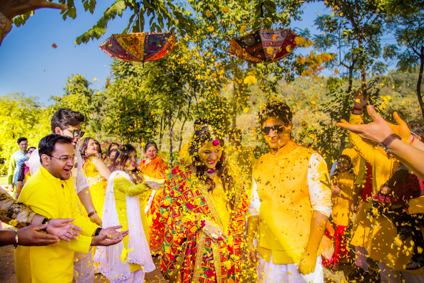
A Hindu wedding ceremony is among the most ritually dense events on earth — 30+ distinct rituals compressed into 3–4 hours, each with specific symbolic meaning, family roles, and visual markers. Photographers who don't understand the sequence miss critical moments or shoot the wrong angle at the wrong time. This is the reference we hand to our second shooters before their first Hindu wedding.
It's organised in ceremony order, with what each ritual means, when it happens, and what to capture.
Pre-wedding day rituals
Ganesh Pujan
When: Before any wedding function begins (often Day 1 morning) What it is: Invocation to Lord Ganesha, the remover of obstacles, performed by the family priest at the bride's and groom's homes separately. What to capture: The priest preparing the ritual, family members participating in the puja, the diya being lit, offerings being made. This is intimate and quiet.
Pithi/Haldi Ceremony
When: Day 1 or morning of wedding (varies) What it is: Turmeric paste applied to the bride and groom by family members, believed to bless and beautify. What to capture: Application by each major family member, the bride/groom's reaction, candid family moments during the ritual.
See our detailed haldi photography guide.
Mehendi
When: Day 1 or 2 (varies) What it is: Henna designs on the bride's hands and feet.
See our detailed mehendi photography checklist.
The wedding day — pre-ceremony
Baraat
When: 2–3 hours before the ceremony muhurtam What it is: The groom's procession to the wedding venue, traditionally on a horse with the groom's family and friends dancing. What to capture: Groom mounting the horse, the band, family dancing, the procession's path, arrival at the venue. Multi-camera coverage recommended.
Milni
When: As baraat arrives at venue What it is: Formal greeting between specific male relatives of both families (groom's uncle meets bride's uncle, etc.) with garland exchanges and gifts. What to capture: Each pair of relatives meeting individually, garland exchange, the groom being greeted by the bride's family.
Var Mala (Jaymala)
When: Immediately after milni What it is: Garland exchange between the couple — often the first formal moment the couple meets at the venue. What to capture: The garlands being exchanged, often the bride is lifted by her brothers/cousins to playfully prevent the groom from putting the garland on (this requires anticipating the moment). Both faces, the family's reaction.
The main ceremony (mandap)
Madhuparka
When: Beginning of mandap ceremony What it is: The bride's father offers the groom a honey-curd mixture as a welcome. What to capture: The exchange between the bride's father and the groom, often emotional for the father.
Kanyadanam
When: Early in the mandap ceremony What it is: The bride's father (or guardian) formally "gives away" the bride. This is one of the most emotional moments of the entire wedding. What to capture: The bride's father holding her hand, then placing it in the groom's hand. The priest pouring water over the joined hands. The bride's face during this moment.
Critical: this is one of the most-requested album frames. Position yourself before this ritual begins.
Vivah Homa / Sacred Fire
When: After kanyadanam What it is: The sacred fire (agni) is lit and offerings made to invoke the gods as witnesses. What to capture: The fire being lit, the priest's mantras (capture the priest's face in his moment of concentration), the couple's faces watching the fire.
Pani-Grahan
When: Around the time of pheras What it is: The groom takes the bride's hand, a symbolic acceptance of marriage. What to capture: The hand-taking moment, both faces.
Mangal Pheras (4 circles in some traditions)
When: Around the fire What it is: Four circles around the sacred fire, each representing a life goal (dharma, artha, kama, moksha). What to capture: Wide-angle of the couple circling, close-ups of feet stepping, the priest leading, the family watching.
Saptapadi (7 sacred steps)
When: After pheras What it is: Seven steps taken together by the couple, each step representing a marital vow. What to capture: Each step, the couple's joined hands, often the bride's brothers/cousins help carry her dupatta as she steps.
Sindoor Daan (vermilion application)
When: After saptapadi What it is: The groom applies sindoor (red vermilion powder) to the parting of the bride's hair. This is the defining moment of becoming married in many Hindu traditions. What to capture: The sindoor being lifted from the container, the groom applying it, the bride's face after application. Macro detail of the sindoor in the hair parting.
Mangalsutra
When: Immediately after sindoor What it is: The groom ties the mangalsutra (sacred necklace) around the bride's neck. In South Indian traditions, this is the muhurtam moment. What to capture: Multi-camera — groom's hands tying, bride's face, both families witnessing.
Pheras (7 circles) - in Punjabi/North Indian traditions
When: This sequence varies by region. North Indian Hindus often do 7 pheras, South Indian Hindus do 4 pheras + 7 steps. What to capture: Wide shots showing the full mandap, individual phera moments, the priest's chanting.
Post-ceremony
Ashirvad (blessings)
When: Immediately after the ceremony What it is: Elders bless the newly married couple. The couple touches the feet of all senior family members. What to capture: Each major elder blessing the couple. The grandmother's blessing is often the most emotional.
Bidaai / Vidaai
When: End of wedding day or following morning What it is: The bride's emotional departure from her parents' home. What to capture: The bride leaving, family farewells, the bride throwing rice over her head (symbolising paying back what she received), her father's reaction, mother's collapse.
Universal photography rules for Hindu ceremonies
- Do not step into the mandap unless invited. The mandap is sacred space.
- Do not block the priest's view of the fire. Position from outside the mandap with long lenses.
- Do not use flash during the homa (fire ritual). Coordinate with the priest's assistant.
- The priest's space is sacred — don't direct him for shots. Photograph him as he naturally moves.
- Capture the bride's face from a respectful angle. Standing directly above her or shooting up her nose is universally disliked.
- Multi-camera the sindoor and mangalsutra moments. These are too important to risk on a single angle.
- Brief family members 30 minutes before the ceremony. Tell them where you'll position, ask them not to block your sight lines during key moments.
- Capture each major elder during the ceremony, individually. They will pass on; these become the most cherished frames in time.
Regional variations to research before shooting
If you're shooting a tradition you haven't documented before, ask the family beforehand:
- What regional/community traditions does your family follow specifically? (Punjabi Hindu, Marwari, Bengali, Gujarati, Maharashtrian, Iyer, Iyengar, Telugu, Konkani, Kerala Hindu, etc.)
- What rituals will be included that aren't in the standard Hindu wedding sequence? (Some communities include Joota Chupai, Ghar Aana, specific blessings)
- Is the wedding at a temple, mandap setup at a hall, or home? (Each has different lighting and positioning constraints)
- What time is the muhurtam (auspicious moment)? (Schedule the wedding day photography around this)
- Who is the priest and what specific rituals will he perform? (Different priests structure ceremonies differently)
Our Hindu wedding coverage
We've documented every major Hindu wedding tradition across Delhi NCR over 12 years. Our team is briefed on regional variations, ceremony positioning, and the cultural nuances that separate adequate coverage from extraordinary coverage.
See our wedding photography service, view our pricing, or contact us — share your tradition and venue, we'll plan coverage accordingly.
Frequently Asked Questions
What are the main rituals in a Hindu wedding?+
How long does the Hindu wedding ceremony typically take?+
What's the most important moment in a Hindu wedding to photograph?+
Should the photographer participate in any rituals?+
Written by
Mukul
Continue Reading
Punjabi Wedding Photography — Rituals, Shot List & Planning Guide
From the chooda ceremony to the doli — every ritual of a Punjabi wedding broken down with what to capture, when to plan it, and the cultural context that separates good Punjabi wedding coverage from generic Indian wedding coverage.
South Indian Wedding Photography in Delhi NCR — Rituals & Frames
From Tamil Brahmin to Telugu, Kerala Hindu to Karnataka Konkani — what differs about photographing South Indian weddings in Delhi NCR, and the specific shots every family expects.
Indian Wedding Photography Timeline — Function by Function
From the haldi at 8 AM to the vidaai at 11 PM — a realistic, function-by-function photography timeline for an Indian wedding, with how long each takes and what to capture.